
"National tide"
300 article(s) found

A brief introduction to the market price of light and pure Costa Rican boutique coffee beans
Coffee is an important economic source of Costa Rica. It was introduced in 1808 and has been cultivated for 200 years. Costa Rica has 1x3 population invested in coffee-related industries. Colombians say that coffee has changed the country and enjoyed a rich environment, and coffee has indeed made an outstanding contribution. Although Costa Rica ranks third from the bottom in terms of land area in Central America, its economic environment is better than that of Central America.

Learn coffee, starting from understanding the three coffee waves
At first, it was the delicious three-in-one instant coffee, and then it changed to the fancy coffee represented by Starbucks. Now, more and more people are beginning to accept drinking black coffee without sugar and milk to taste the pure flavor of the beans themselves. The first wave of coffee arose from instant coffee, represented by Nestl é and Maxwell, which tasted delicious and fragrant.

Learn coffee, starting from understanding the three coffee waves
At first, it was the delicious three-in-one instant coffee, and then it changed to the fancy coffee represented by Starbucks. Now, more and more people are beginning to accept drinking black coffee without sugar and milk to taste the pure flavor of the beans themselves. The first wave of coffee arose from instant coffee, represented by Nestl é and Maxwell, which tasted delicious and fragrant.

A brief introduction to the planting market price of Costa Rican boutique coffee beans with unique flavor
Coffee consumed in China (dyed blue or not dyed) accounts for about 10% of the total output. Local per capita coffee consumption is twice that of Italy or the United States. Other kinds of Brazilian coffee, such as Rio and Parana, can be produced in large quantities because they do not require too much care. Although the taste is rough, it is a kind of good and cheap coffee, because it is distributed all over the country and has solid quality.

"create China, Zhihui and Common Youth"-- A record of the May 4th mass entrepreneurship and innovation week of Garage Coffee
The orchid fragrance is far away, and the cymbidium grass is fragrant and comfortable. In early summer, the May 4th mass entrepreneurship and innovation week boutique event, jointly sponsored by Gongqingcheng Garage Coffee Incubator, Garage Coffee Technology Co., Ltd. and Zhongguancun Entrepreneurship Street Joint Party Committee, was launched on May 4th Youth Day in Zhongguancun, Beijing, a garage coffee incubator. At that time, from Beijing,
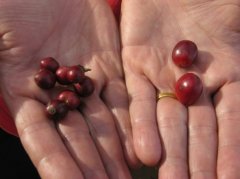
The knowledge of coffee beans you don't know, Robusta.
People always habitually look at things in dichotomy, good and bad, good and evil, good and bad. The same is true in the world of coffee. Arabica coffee beans are always classified as good, while its distant relative, Robusta, is often classified as bad. We might describe it this way, if Arabica is a gift from an angel.

A brief introduction to the description of the flavor, taste and aroma characteristics of Costa Rican boutique coffee beans
In 2002 and 2003, Colombia produced 3 million packets of coffee (60 kg each) and exported 1.87 million packets of coffee. 40% of the exported coffee is high-quality refined coffee, which is known internationally as GOURMET coffee. In the international market, refined coffee costs an average of US $93.61 per bag (46kg) (FOB), which is US $19.56 higher than that of ordinary coffee. I also have a kind of refined coffee, each bag.

A brief introduction to the market price of high-quality Costa Rican coffee beans with strong acidity
Coffee consumed in China (dyed blue or not dyed) accounts for about 10% of the total output. Local per capita coffee consumption is twice that of Italy or the United States. Other kinds of Brazilian coffee, such as Rio and Parana, can be produced in large quantities because they do not require too much care. Although the taste is rough, it is a kind of good and cheap coffee, because it is distributed all over the country and has solid quality.
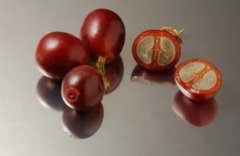
A brief introduction to the flavor and aroma characteristics of Costa Rican boutique coffee beans with fruit flavor
High-quality Costa Rican coffee is called extra hard beans, and this kind of coffee can grow at an altitude of more than 1500 meters. Altitude has always been a problem for coffee growers. The higher the altitude, the better the coffee beans, not only because the higher altitude can increase the acidity of the coffee beans and thus increase the flavor, but also because the night temperature at the higher altitude is lower, which can make the trees grow slowly.

A brief introduction to the flavor, taste and aroma characteristics of highly acidic Costa Rican boutique coffee beans
Coffee consumed in China (dyed blue or not dyed) accounts for about 10% of the total output. Local per capita coffee consumption is twice that of Italy or the United States. Other kinds of Brazilian coffee, such as Rio and Parana, can be produced in large quantities because they do not require too much care. Although the taste is rough, it is a kind of good and cheap coffee, because it is distributed all over the country and has solid quality.

Boutique coffee is like Robusta that you don't know.
Arabica coffee beans are always classified as good, while its distant relative, Robusta, is often classified as bad. People always habitually look at things in dichotomy, good and bad, good and evil, good and bad. The same is true in the world of coffee. Arabica coffee beans are always classified as good ones.

A brief introduction to the history and culture of the origin and development of Costa Rican boutique coffee beans with unique flavor
LaMinitaTarrazu coffee is a famous local product, but its production is limited, about 72600 kilograms a year. It is grown on a piece of land called LaMinita, which is owned by nearly three generations of the McAlpine family in the UK. In fact, this land can produce more than 450 tons of coffee a year. But the species of Tarasu Latin American coffee

A brief introduction to the cultivation of fruit-scented Costa Rican boutique coffee beans, geographical location, climate and altitude
Coffee was introduced into Costa Rica from Cuba in 1729. Today, its coffee industry is one of the well-organized industries in the world, with a yield of 1700 kg per hectare. Costa Rica has only 3.5 million people but 400m coffee trees, and coffee exports account for 25 per cent of the country's total exports. The volcanic soil of Costa Rica is very fertile and well drained, especially in the central part.
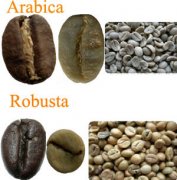
What do you not know about robsta robsta's notoriety?
People habitually treat things with dichotomies, good and bad, good and evil, good and bad... The same is true in the coffee world. Arabica coffee beans are always classified as good, and their distant relatives, Robusta coffee beans, tend to be classified as bad. We might say, if Arabica is a gift from angels
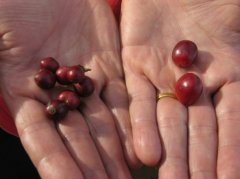
Boutique Coffee Common sense Robusta coffee beans you don't know
People always habitually look at things in dichotomy, good and bad, good and evil, good and bad. The same is true in the world of coffee. Arabica coffee beans are always classified as good, while its distant relative, Robusta, is often classified as bad. We might describe it this way, if Arabica is a gift from an angel.

A brief introduction to the legendary Hartmann boutique coffee bean origin, development, history and culture
To be exact, Lindong Lintong refers to coffee growing in a small area in the southwest of Lake Toba in Lindong District. The small coffee growing area is scattered on a high and wavy clay plateau full of fern covers. Lintong Lindong Coffee is grown without shade, does not use chemicals, and is almost entirely owned by small private owners. Mandheling Manning is a broader term that includes Lin.
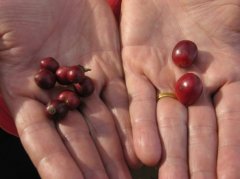
The common sense of boutique coffee beans Robusta that you don't know.
People always habitually look at things in dichotomy, good and bad, good and evil, good and bad. The same is true in the world of coffee. Arabica coffee beans are always classified as good, while its distant relative, Robusta, is often classified as bad. We might describe it this way, if Arabica is a gift from an angel.

A brief introduction to the treatment method of grinding degree and baking degree of Costa Rican boutique coffee beans with unique flavor
High-quality Costa Rican coffee is called extra hard beans, and this kind of coffee can grow at an altitude of more than 1500 meters. Altitude has always been a problem for coffee growers. The higher the altitude, the better the coffee beans, not only because the higher altitude can increase the acidity of the coffee beans and thus increase the flavor, but also because the night temperature at the higher altitude is lower, which can make the trees grow slowly.

A brief introduction to the history and culture of the origin and development of Costa Rican boutique coffee beans
Second, vigorously develop high-quality coffee, increase the added value of coffee exports, and make up for the losses caused by the fall in coffee prices. Its main approach is to focus on the cultivation of high-quality coffee from 1000 meters to 1500 meters above sea level, prohibit the collection of immature coffee beans, strengthen the screening of coffee beans, and pay attention to the environmental protection ingredients during planting and processing. In 2002 and 2003, the output of coffee in Colombia was 3 million packets (60 per pack).

A brief introduction to the history and culture of the origin and development of Costa Rican boutique coffee beans with fruit flavor
Coffee was introduced into Costa Rica from Cuba in 1729. Today, its coffee industry is one of the well-organized industries in the world, with a yield of 1700 kg per hectare. Costa Rica has only 3.5 million people but 400m coffee trees, and coffee exports account for 25 per cent of the country's total exports. The volcanic soil of Costa Rica is very fertile and well drained, especially in the central part.